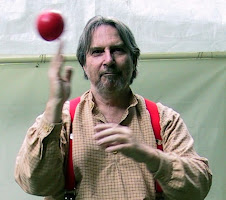
It's gone now.
I had it for fifty years, covering my face, hiding me, mostly from myself. Not consciously hiding, but that's what it amounted to. My beard was my 'beard'. I don't presume to speak for anyone else here, bearded or otherwise - this is about me alone.
I wanted to see what I looked like. To see if I'd been missing some aspect of myself. Something I needed but was afraid of. I wanted to see what I'd been covering up and who was under the beard. So I shaved it off. It will stay off for a while - at least until it no longer matters.
Fifty years ago I was discharged from the Marine Corps. They'd offered me the usual bonuses to stay, and an assignment in some place in Japan I'd never head of. Attractive, but not enough so to compensate for life in the Corps. So I refused their kind offer and got out when my three years was up. My friends who re-upped found that that place in Japan was a staging area for Vietnam. None that I knew ever came back. But I didn't know that then.
What I did know was that the Marine Corps may have made me a man, but I was still the man that I was afraid of being, and afraid of what I might become. This fear had been one of the reasons I left AFSC summer camps to join the Marine Corps. Eddy Izzard might have said I was a baby Executive Transvestite in hiding, but I didn't know that then, either. I just knew that as a thirteen-year-old I'd been caught obsessively stealing women's undergarments and nightgowns from clothes lines and laundry rooms, and been punished for it. A year in a locked mental institution, with electroshock "therapy" treatment every week, and then every other week, and then until I gamed the system by voluntarily having it without the pentathol so that they'd figure they had "won."
The strap goes on your head, the rubber piece goes in your mouth, the needle goes in your arm, the machine is turned on and you get turned off. Unilke sleep, during the electroshock-induced coma there is no perception of self. None. No thoughts or dreams. Memory only gradually comes back. You become conscious to find that you have been doing things or are in the midst of doing things, but the why and for how long and who -- the whole back-story of self -- is gone. And while the memories eventually come back they seem, for a while, to belong to someone else. Even the structure that holds long-term memories together gets warped. From that point on you are never sure that you're the same person you were before they turned you off. And then they do it again. For a year.
Worst, was that this was done with the permission of my mother.
As therapy it wasn't effective. The compulsions kept coming back. But it was a definite winner as negative reinforcement, and punishment, and torture. It made me terrified of my urges and careful never to get caught again, despite my compulsions to risk discovery. I suspect this is why I may have seemed aloof to some, and have never kept up long-term friendships. The fear of being discovered, of getting caught, has shaped much of my life.
After that year I learned to see my past as a series of stories. But they were like Nabakov or Conrad stories, where you can't always trust the narrator. You wonder if what you remember is true and not just the accumulated embellishments you've added and liberties you've taken in telling and retelling the stories of your life. But it's all you have, so you go with it. Even today, each immediately passing month and year fades into that gray uncertainty, and because you can't be entirely sure of the truth or sequence or spacing of events, it becomes important to be a good story teller because that is your life.
We now accept sexual variation and gender bending enough to not freak out when a child dresses in the clothing of the opposite sex. The idea of subjecting anyone to shock treatment for that is for most people, I hope, absurd and horrifying. But this is now and that was then. In the mid 1950s it was quite acceptable as a treatment for sexual deviance of any kind, or depression, or anything else they couldn't cure and didn't understand. Needless to say, my views on sex were shaped as much by fear as by the compulsions that drove my sexual expression.
So who and what am I? I'm a seventy-one-year-old man who has lived the life expected of me, done reasonably well, and achieved much that I am quite proud and much that is quite forgettable. That makes me quite ordinary, I think. I vastly prefer women to men, sexually, but I've loved both. Do I want to be a woman? No. Do I want to have sexual relations with men? No. Do I occasionally fantasize or speculate? Well, doesn't everyone, really? I am 100% physically a man, but emotionally a man and a woman. I dress and present myself as a man in almost all circumstances, though I may choose to look/feel/present as more female in private and where and with whom I feel safe doing so. I have never wanted to be a drag queen. I hope that as I accept myself and gather my courage I will become more visibly "out," whatever that means for an elderly male with transvestite compulsions. I take strength and courage from the example of Eddy Izzard, the philosophy of Gore Vidal, and from the intelligent and perceptive love of my life-partner, Beth.
This is a strange age, personally and culturally, in which to so come out. Why, and why now? Well, a year of electroshock treatment has its effects, as does a lifetime of hiding and shame. I did not accept my sexuality until after the death of my second wife, Judith, to whom I was married for forty years. I'd recognized it long before then, of course, but felt I could not express it without straining the already strained compact of our life together. Still, it was a good life and I regret none of it. Now, with my new partner and soon to be wife, Beth, and among friends for whom this seems like a perfectly natural manner of expression, I have a new life in which I feel supported and accepted. So maybe I can do this.
From the sixties on I've been politically aware of, and quite active in support of sexual diversity. Hypocrisy disgusts me, especially my own, and now, rather than being ashamed of what I was, I am chagrined at how much of myself I've hidden from friends and family, even though nobody needed to know. With Gore Vidal I believe that the individual human sexual experience is broader than commonly or even radically perceived, and that while sexual labels are sometimes useful politically, they are constricting personally. With Eddy Izzard I smile and try to think of myself as an Executive Transvestite composed of one-and-a-half people.
When her mother told her I was a cross-dresser, Julia only said, "Okay, but is he a good one?" I hope to be a good one and not a parody or an eyesore. To my friends and family, I love you and I deeply regret not being forthcoming before this. Now I can be, so I am. Mostly I hope that it doesn't make much difference. I think I am who I've always been, just less afraid and secretive. Just thinking of that is an incredible relief.
It's been a year since I started this note. The beard has grown back because I hate shaving. But I'll periodically shave it and maybe more, if I feel like it. It's now, only now, just a beard.
Don't expect to see me in a dress and wig except maybe at Mary's parties. I believe cross dressing will always be a private matter for me except politically, but I know things tend to change, even at 71. Yet I don't feel I'm changing who I am, but becoming larger, realizing more of myself. I don't think these changes will matter to anyone who already knows me. I hope that some will be encouraged by this note and feel that it's never too late to reshape your life and begin living again.
I hope also to become kinder, less impatient, and more nurturing. I regret no longer being young enough to make myself pretty or beautiful. I do find comfort in now seeing a mature, centered woman in the pictures we took a year ago, when Beth, who is now my wife and has always been my soul mate, first helped me with dress and makeup. Yesterday I even recognized myself.